

Quick summary: Airbnb income is taxable, but hosts can lower their taxable income by tracking and deducting legitimate Airbnb rental expenses (cleaning, supplies, a portion of utilities, startup costs, etc.). The easiest way to stay organized is to separate Airbnb finances from personal finances and use a tool like Tiller to automatically pull transactions into a spreadsheet for easy categorization and tax-time review.
~4 minute read. Updated Aug 20, 2026.
Key facts at a glance
- Airbnb hosts share more than 6 million listings worldwide — hosting has become a real income stream, not just a side hustle.
- Airbnb income is taxable. It must be reported on your tax return.
- Airbnb rental expenses reduce taxable income. Carefully tracked business expenses can be subtracted from Airbnb earnings.
- Airbnb provides tax documents and reporting to help your accountant calculate taxable income.
- Consult a tax professional for advice.
1. Airbnb hosting is a business — treat it like one
Any money earned from Airbnb counts as taxable income. That’s the not-so-great news.
The good news: if you carefully track the expenses associated with running your listing, you can reduce your taxable income by deducting those expenses. Airbnb also provides reporting and tax documents that your accountant will need to calculate your taxable income accurately.
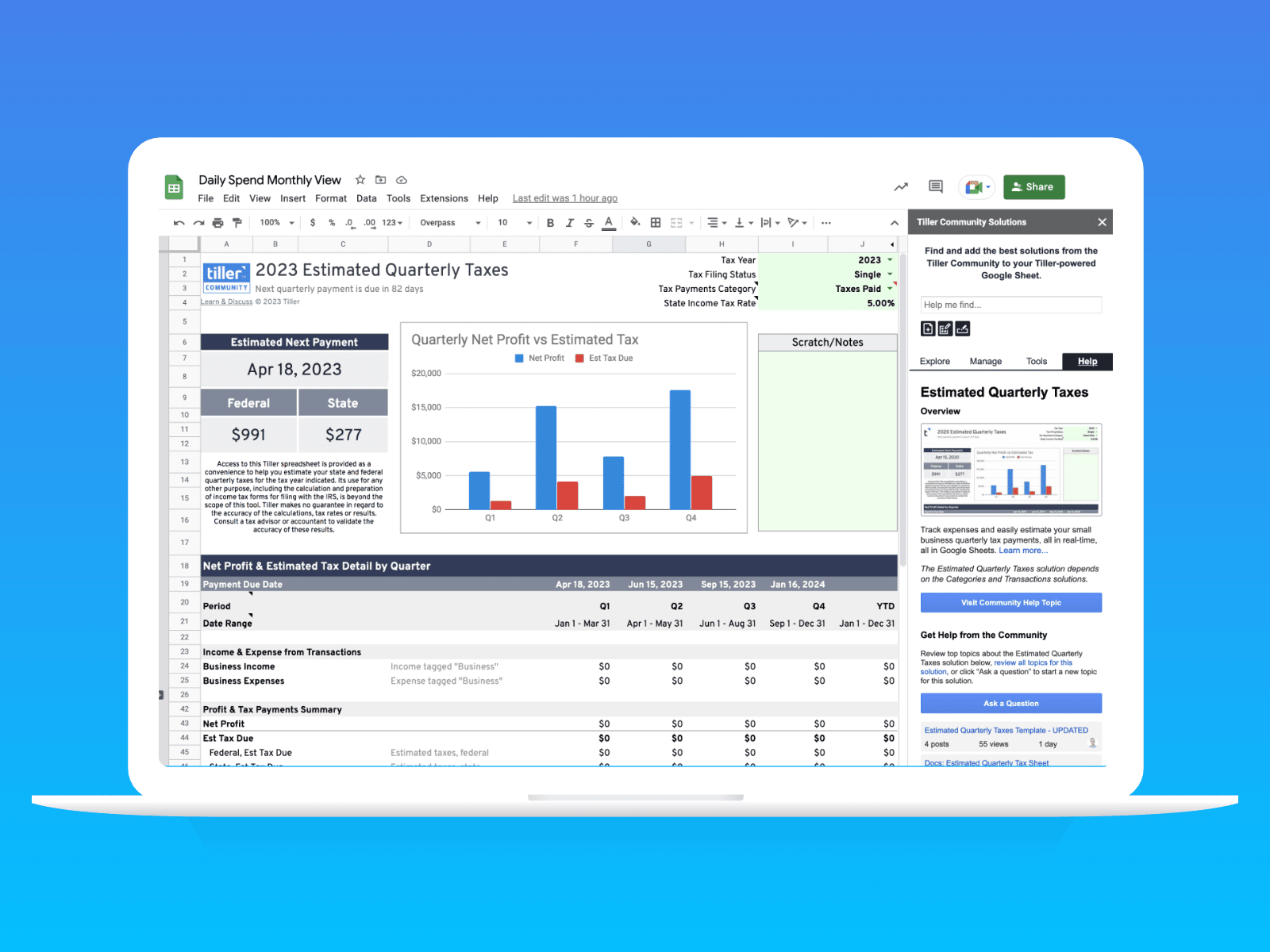
Tiller makes this easy by automating those transactions into a spreadsheet for easy tracking and reporting.
Resource: Should I expect to receive a tax form from Airbnb?

2. How your space affects what you can deduct
Where your listing is located — and whether you live there too — changes what you can count as an expense.
If you rent a portion of a home you also live in:
- A percentage of utilities (electricity, water, internet) can count as Airbnb expenses.
- The percentage is typically based on the number of days the space was rented during the year (available in Airbnb’s reporting).
- An accountant can help calculate the correct business-use percentage.
Occupancy taxes:
- These are separate from income tax owed on Airbnb earnings.
- Whether occupancy tax is automatically withheld or something you must pay yourself depends on your listing’s location.
- Talk to both a tax professional and Airbnb directly to confirm how occupancy tax applies to your listing.
3. What counts as an Airbnb expense?
Common deductible expenses include:
- Cleaning services — paying someone to clean and prepare the space between guests
- Supplies — toilet paper, paper towels, soap, shampoo, and other toiletries
- Startup costs — towels, furniture, linens, and other one-time purchases
- A portion of utilities — when the space is shared with your personal residence (see above)
More complex situations — such as buying a home or building a structure specifically for Airbnb use should be reviewed directly with an accountant or tax professional, since these involve larger tax considerations beyond simple expense tracking.
4. How to actually track Airbnb expenses
Recommended approach: use a spreadsheet.
Tiller automates this by pulling your bank and card transactions directly into a spreadsheet. You categorize the transactions, and the result is a clean, organized record ready for your accountant to review.
Best practices for staying organized:
| Practice | Why it helps |
|---|---|
| Use a separate checking account for Airbnb income/expenses | Keeps Airbnb cash flow fully separate from personal finances |
| Use a dedicated credit card for Airbnb purchases | Makes it easy to identify which transactions are Airbnb-related |
| Set up a separate Tiller spreadsheet for Airbnb only | Ideal when Airbnb accounts are fully separate from personal accounts |
| Create a category group for Airbnb expenses | Ideal when Airbnb transactions are mixed in with personal accounts — use one group with a set of expense categories underneath it |
| Save receipts digitally | Snap a photo, save it to Google Drive, and link the file to the matching transaction row — especially useful for large purchases |
If your accounts are shared with personal use: you’ll need to manually calculate and deduct the applicable portion of shared expenses (like utilities) but using a simple category structure can help you easily identify which are considered Airbnb deductible expenses vs personal expenses you can’t deduct.
Bottom line
Airbnb has made it possible for everyday hosts to turn existing space into real income — and most of these same principles apply to Airbnb Experiences too. With separate accounts (or at least separate categories) and a spreadsheet that automatically imports transactions, tax time becomes a matter of reviewing an already-organized record rather than reconstructing a year of receipts from scratch.
More from Airbnb: Taxes help topic
FAQ
Is Airbnb income taxable? Yes. Any money earned from hosting on Airbnb is taxable income and must be reported on your tax return.
Can I deduct Airbnb-related expenses? Yes. Expenses directly tied to running your listing — cleaning, supplies, startup costs, and a portion of shared utilities — can be deducted to reduce your taxable income.
What’s the easiest way to track Airbnb expenses? Use a dedicated spreadsheet, ideally one that automatically imports bank and credit card transactions (like Tiller), paired with a separate account or card used only for Airbnb activity.
Do occupancy taxes work the same as income tax on Airbnb earnings? No. Occupancy taxes are separate from income tax and vary by listing location — some are automatically withheld by Airbnb, others must be paid directly by the host.
Does this apply to Airbnb Experiences too? Most of the same expense-tracking guidelines apply to Airbnb Experiences as well as traditional listings.