

Be honest.
How many times have you gotten an email that says “your subscription has renewed” and then stared at the sender name for a full ten seconds trying to remember what the subscription was actually for?
If you’re me, the answer is a lot. The cost is even more. is a lot.
The 99-cent charges are the worst. Too small to feel urgent. Too vague to remember. Small enough that canceling feels like more work than just letting it happen. Multiply that by every 99-cent charge, every $4.99 charge, every “annual plan renewing on Tuesday” I forgot I opted into during a free trial in 2022, and the math starts to add up, fast. When I signed up for Tiller and actually started looking at my transactions in a spreadsheet, I found subscriptions I had genuinely forgotten I owned, subscriptions I didn’t remember signing up for at all (and this is the part that still bothers me), subscriptions I was somehow paying for twice.
Why subscription blindness is a real problem
Subscription creep is one of the most common ways money quietly creeps out of your bank account.
The numbers vary depending on which survey you read, but the general finding is consistent: most people underestimate their monthly subscription spending by a lot. A C+R Research survey found that the average consumer estimates they spend around $86 a month on subscriptions and actually spends over $200. That’s a $115 monthly gap, roughly $1,400 a year, on things you already believe you’re accounting for.
The reason it happens: subscriptions are designed to be invisible after the sign-up. You get one email confirming the purchase, a card gets charged monthly, and after that the friction is on the cancellation side, not the retention side. Nobody pings you to remind you that you’re still subscribed. The subscription’s job, once you’ve signed up, is to be forgotten.
Which means the only way to actually know what you’re paying for is to go find it.
How I actually found them (in about 30 minutes)
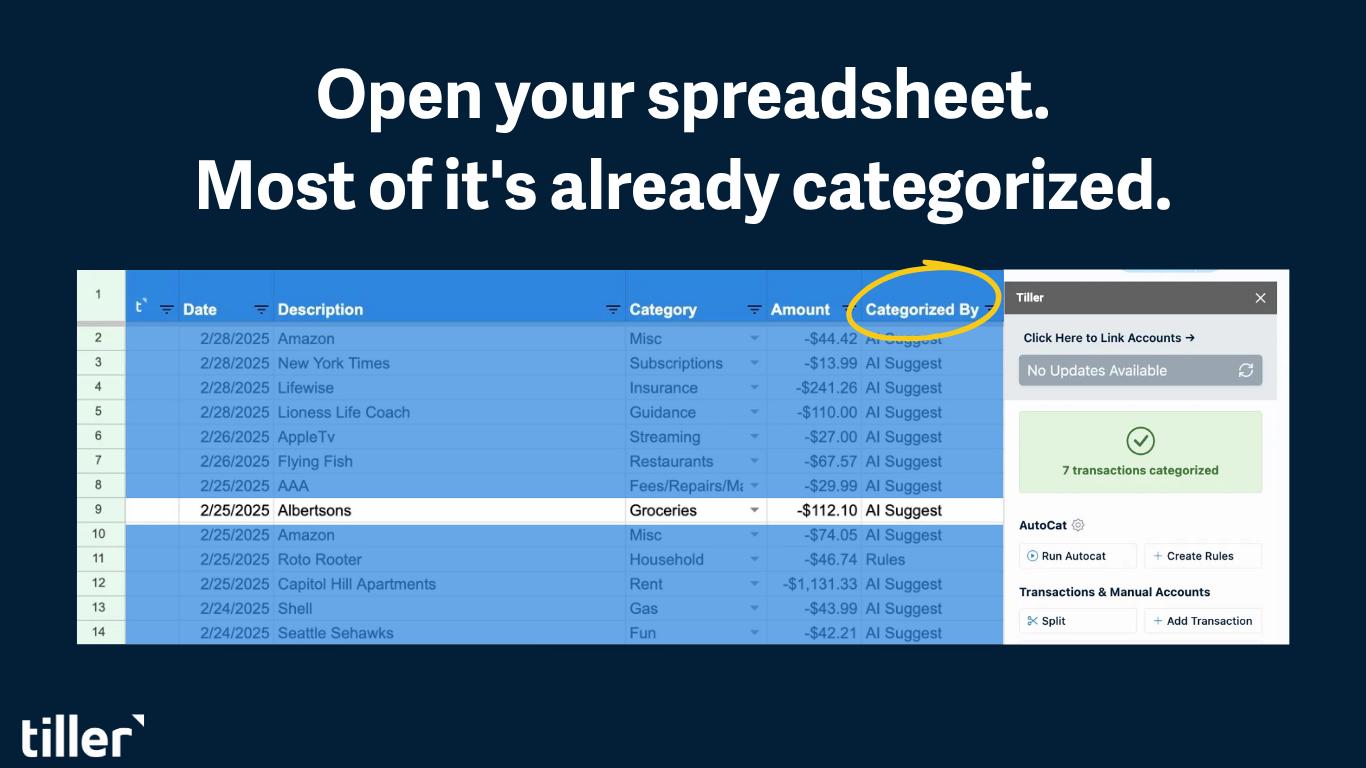
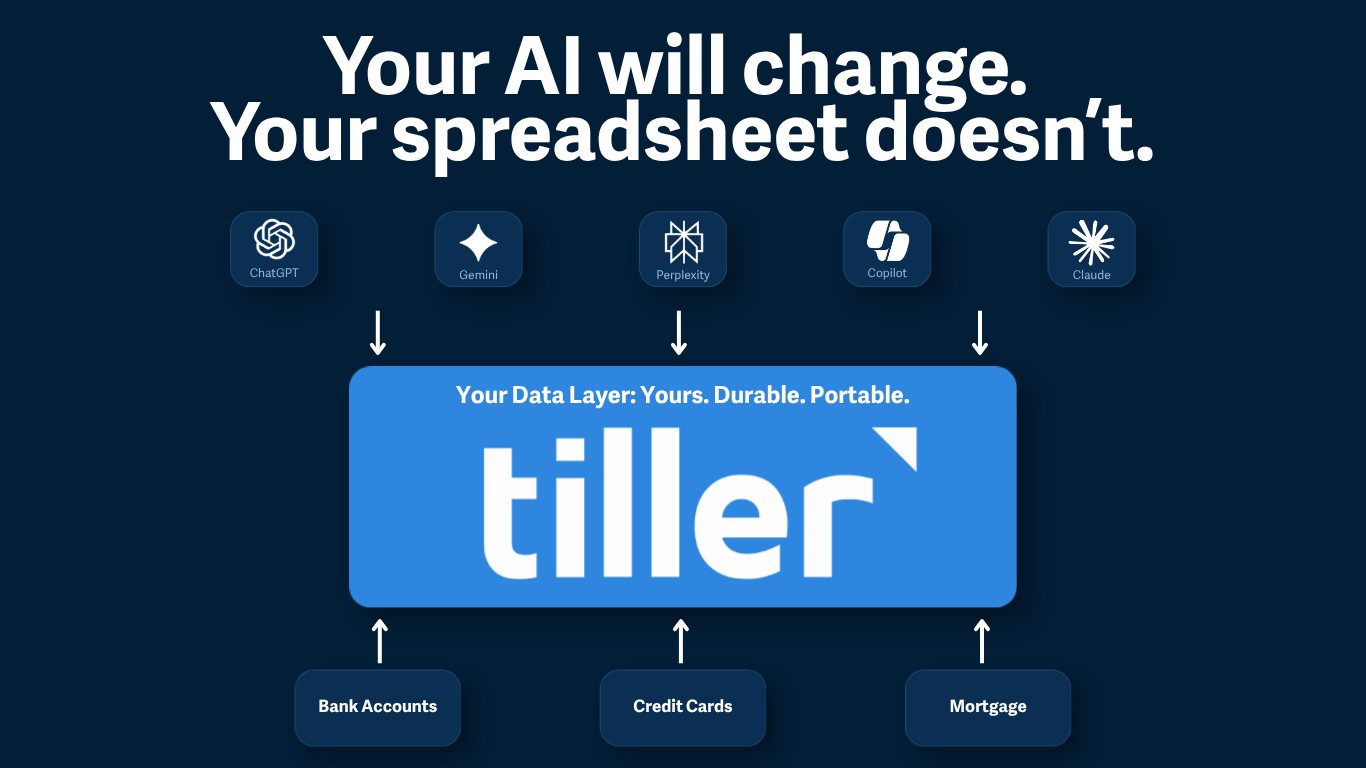
The reason I found my forgotten subscriptions wasn’t discipline. It was that Tiller pulls every transaction from every card and account into a Google Sheet or Excel workbook, which meant they were all sitting in front of me in one place for the first time.
Once the data was there, the audit was pretty simple:
Filter for recurring charges. Any transaction that shows up at the same amount, on roughly the same day, from the same merchant, in multiple months. Those are the subscriptions.
Sort by frequency. Monthly is the most common. Quarterly and annual are the ones that catch you off guard: a $60 charge you don’t recognize is much more likely to be a forgotten yearly renewal than a random purchase.
Look for duplicates. This is the part that got me. I was somehow paying for two different cloud storage services because I’d signed up for a promotional plan on one and forgot to cancel when I switched to the other. Duplicate subscriptions are the highest-value to catch because the second provides no additional value beyond the first.
Cancel the ones that don’t earn their keep. Not the ones you don’t love; the ones you actively don’t use. There’s a difference. Some subscriptions are worth keeping even if you only use them occasionally. Others are just cost with no corresponding output.
In the first week I had Tiller, I canceled more subscriptions than I’d canceled in the previous three years combined.
The math that made it worth it
Tiller is $99 for the year. That works out to about $8.25 a month.
If you find and cancel one forgotten subscription that’s more than $8.25 a month, Tiller has already paid for itself. Most people find several. I found more than several. The audit isn’t just a nice-to-have. For most people, it’s a net positive in the first month.
The math is boring, but it’s boring in a good way: this is one of the few software subscriptions where the tool is likely to reveal enough hidden cost to pay for itself before you finish the free trial.
The console makes this easier now
The recent update I’ve actually been using a lot: the new Tiller console works on mobile, which means when I get one of those mystery renewal emails, I can look up the merchant on my phone in about thirty seconds. Before, this required opening a laptop, logging in somewhere, and doing a search. Now it’s a quick phone check. Which sounds small until you realize that the reason nobody investigates mystery charges is that it’s annoying.
Reducing the friction on that investigation is how forgotten subscriptions get caught. Once it takes thirty seconds, you’ll actually do it.
If you want to try the audit yourself
You can try Tiller free for 30 days. The subscription audit is one of the first things I’d recommend doing when you sign up. Pull up your transaction history, filter for recurring charges, and look at what you’re actually paying for every month.
You will be shocked. I promise.