

Is it just me, or does money just… disappear the second I leave the house? It feels like I pay a tax just for opening my front door.
Even if I don’t remember buying anything, the money is just… gone. The cash is not in the wallet, and the credit card has been swiped. And I’m left wondering where it went.
For most of my adult life, I answered that question by… not answering it. I’d either avoid my bank account altogether or glance at it with a kind of resigned puzzlement before quickly closing the tab. The money went where the money went. Some days are just like that.
Turns out it wasn’t a mystery. It was a data problem.
The question everyone asks and nobody actually answers
“Where does my money go?” is possibly the most-asked question in personal finance on the internet. It’s also one of the least-answered, because most of the tools that promise to answer it either:
- Show you a pie chart that just says “Restaurants: 34%”
- Guilt you about specific purchases in the moment via push notification
- Categorize your spending using someone else’s rules that don’t actually match how you think about money
None of those things answers the real question. The real question is more like: can you please tell me what happened this month in a way that makes sense to me? And that’s a question that requires seeing the whole picture, not a summary, not a notification, not someone else’s version
What actually changed for me
What fixed this for me wasn’t discipline. It wasn’t a new app. It wasn’t downloading a printable budget template from Pinterest (though I have done that).
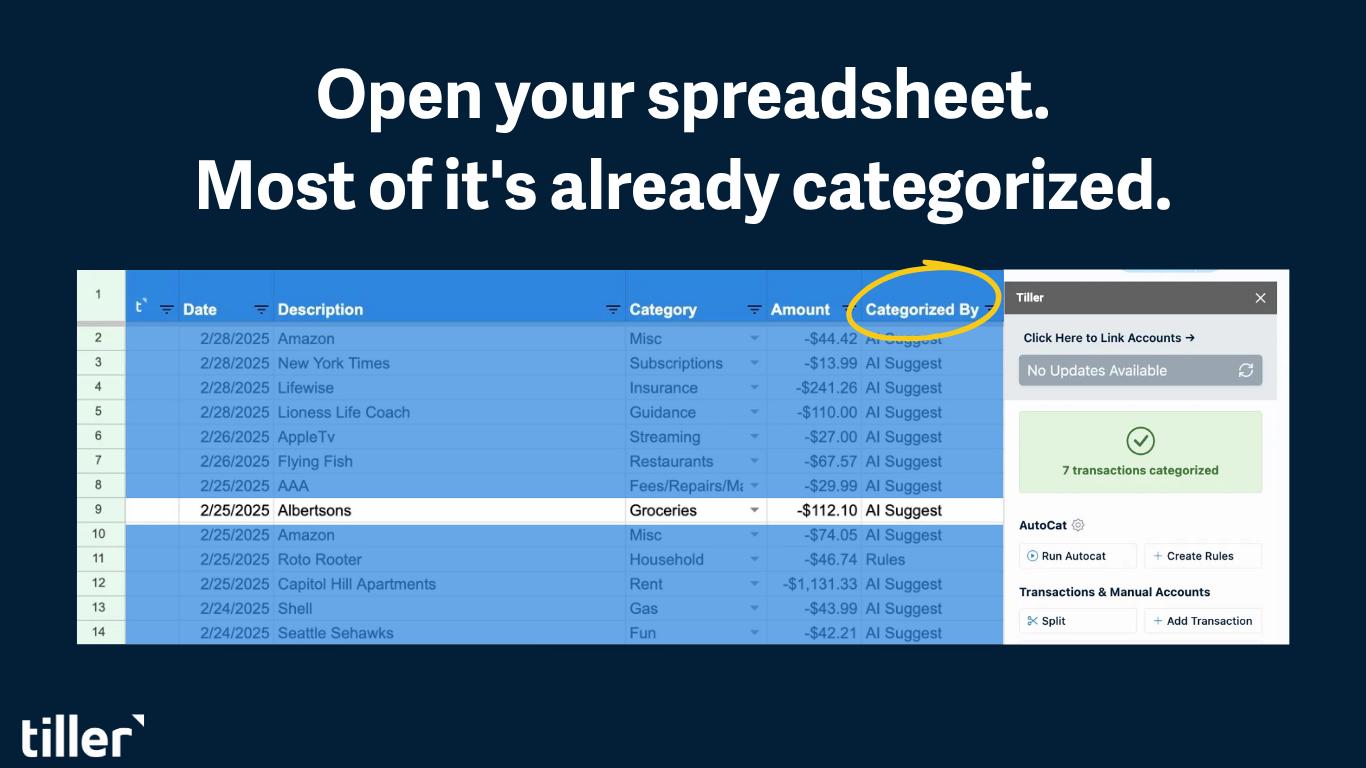
It was having all my transactions in one place, automatically, in a format I could actually look at.
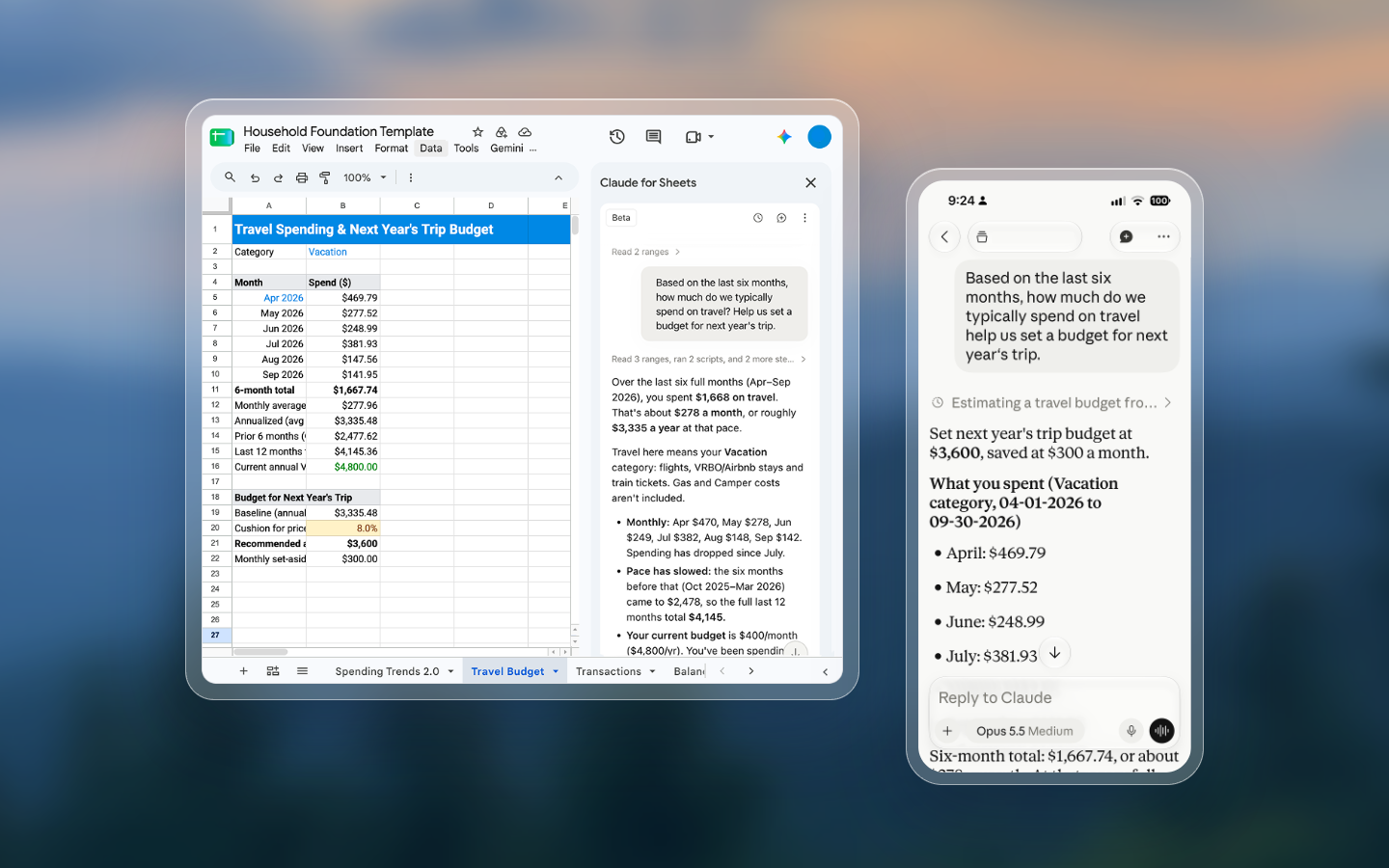
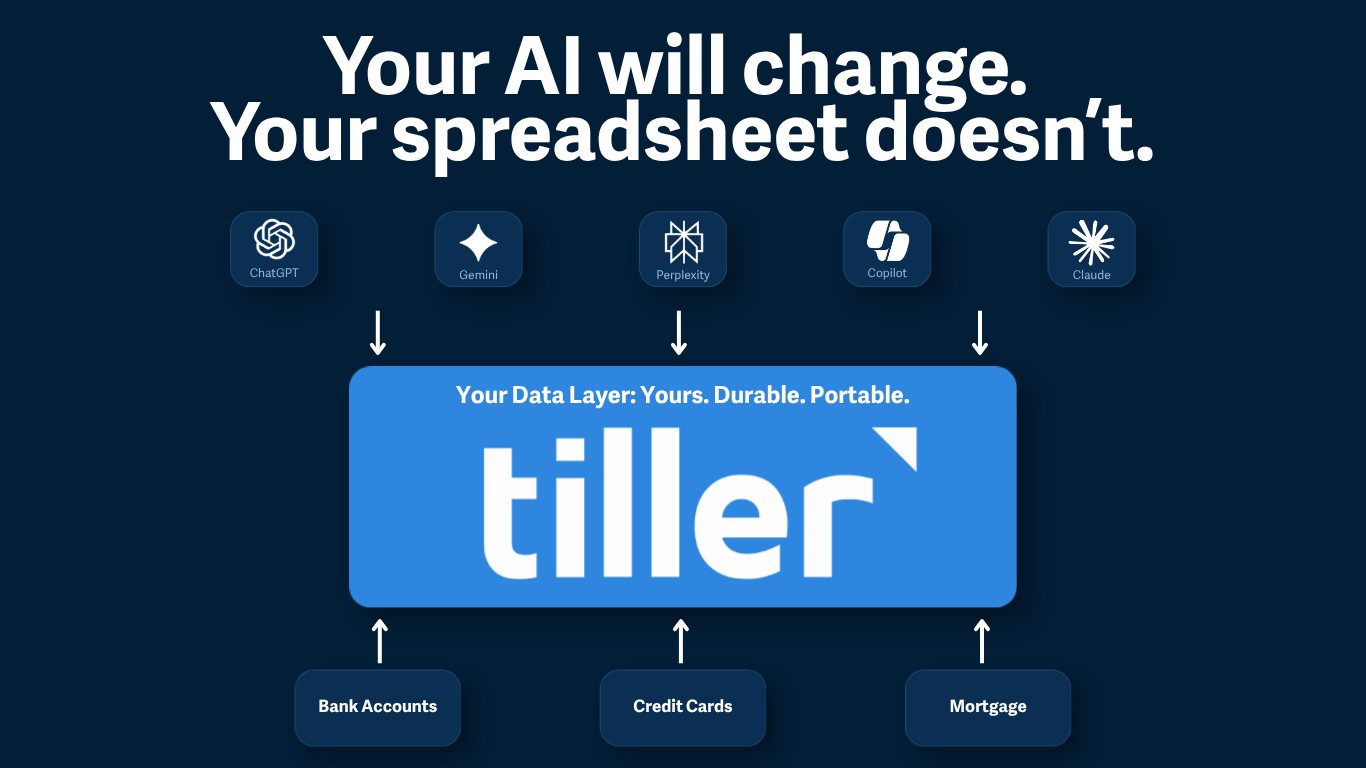
I use Tiller, which pulls every transaction from every account into a Google Sheet or Excel spreadsheet. No exports. No logging into different banks and cards. The data just shows up, and I can look at it whenever I want (and now on the go with the new Console, but more on that in a second…).
What surprised me was how much just seeing it changed things. Not tracking it, not budgeting it, just seeing it. Once every purchase was laid out in front of me, the mystery of Saturday afternoons resolved itself pretty quickly. Turns out I go to the same coffee shop a lot. Turns out I take rideshares, and I could sometimes walk instead. Turns out I have a subscription to a service I stopped using in 2023.
I didn’t need discipline for any of that. I just needed to see it.
And now, in line at the coffee shop
The other thing that changed recently is that I can check my spreadsheet on my phone.
Tiller just launched a new console that works on mobile, which means I can look up where I’m at on any category from anywhere. Standing in line at the coffee shop, deciding whether to add the pastry. In the parking lot before I walk into Target. On the couch on a Sunday night, admiring my awesome cats, doing nothing in particular, just curious.
This sounds small. It isn’t. Most of the decisions that shape a month happen in tiny moments: a $6 add-on here, a “sure, why not” impulse there. Being able to check the number in that exact moment, without opening a laptop or logging into anything, is the difference between knowing where you stand and finding out on the first of next month.
I might still buy the coffee. I just know I bought it.
The real value of knowing
Here’s the thing I wish someone had told me before I spent years pretending my money vanished
You don’t have to like where your money is going. You just have to know.
Knowing is where every good money decision starts. Not budgeting, not saving, not investing: knowing. What you actually spend on. What you actually value. What patterns you actually have, versus the patterns you think you have.
Everything else (the budget, the reallocation, the “maybe I should cancel that subscription”) flows from that. But it can’t start until you can see the shape of what’s happening.
If you want to try it
You can try Tiller free for 30 days. After that, it’s $99/year, or about $8.25 a month, which is two cups of coffee for many of us. In girl math, that’s basically free if it helps you catch even one forgotten subscription.
The console is included. So is the mobile experience. So is the entire spreadsheet-based system that made “where does my money go” a question I can actually answer now.
You’ll still not love every category. But at least you’ll know.