
Here is something I used to do every Sunday for years.
I would open my laptop. I would log into my checking account. I would copy the week’s transactions into a spreadsheet. Then I would log into my savings account and do the same thing. Then my credit card. Then my other credit card. Then I would categorize everything by hand. Then I would total it up.
By the time I was done, an hour had passed. Sometimes more. And I had done the smallest, most rote part of personal finance — getting the data into one place. I had not done any actual budgeting. I hadn’t made a single decision. I had just typed.
That hour was the part that killed every budget I ever tried.
What manual budgeting actually costs you
Most people who manually track their spending describe it the way I just did. An hour a week, give or take, depending on how many accounts you have and how organized you keep them. Some people do it daily in smaller chunks. Some people batch it monthly and then have a worse hour all at once.
Either way, the math is roughly the same: 52 hours a year, just to copy numbers from one place to another.
That’s a full work week. Spent typing. Not deciding anything, not changing anything, not learning anything new. Just typing.
And here’s the thing nobody tells you about that hour: it’s also the hour that decides whether you keep budgeting. Not the categorizing, not the planning, not the discipline. The transcription. That’s the part people quit. By week three, the activation energy of “I have to open six tabs and type for an hour” wins. Every time.
The hidden costs (it’s not just time)
It’s worth saying: time isn’t even the biggest cost.
The higher cost is that manual tracking warps the quality of the look. When you’ve just spent an hour doing data entry, you’re not in a great mindset to evaluate your finances honestly. You’re tired. You want to be done. You’re more likely to gloss over the things that should make you pause, because pausing means more work, and you have already done enough work.
The whole point of looking at the numbers is to learn something. To notice patterns. To make small adjustments. None of that happens well at the end of an hour of typing.
There’s a version of this where automation isn’t about saving time — it’s about preserving the part of your brain that can actually think about money.
How automated budgeting changes the math
When I switched to Tiller, the typing part went away.
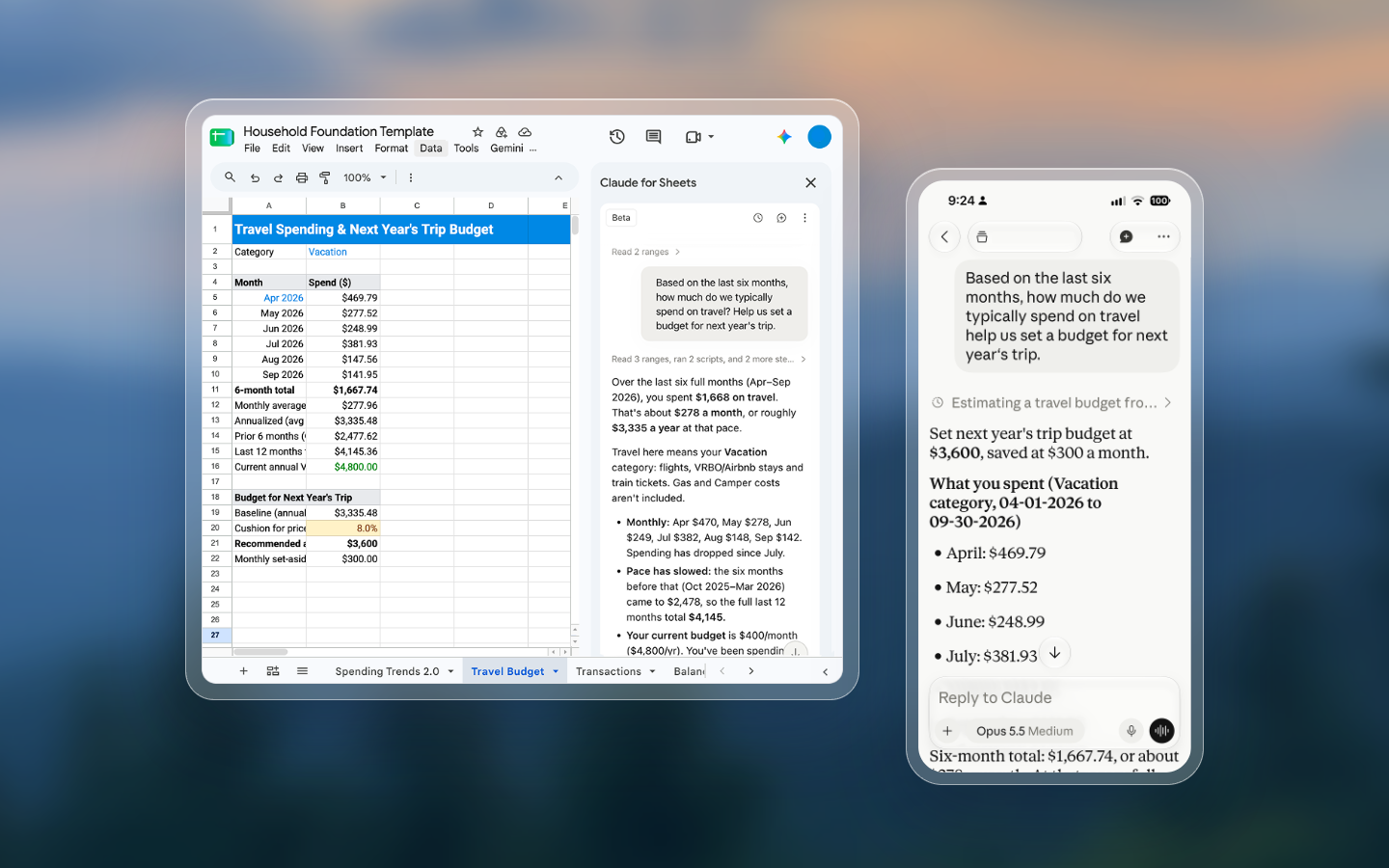
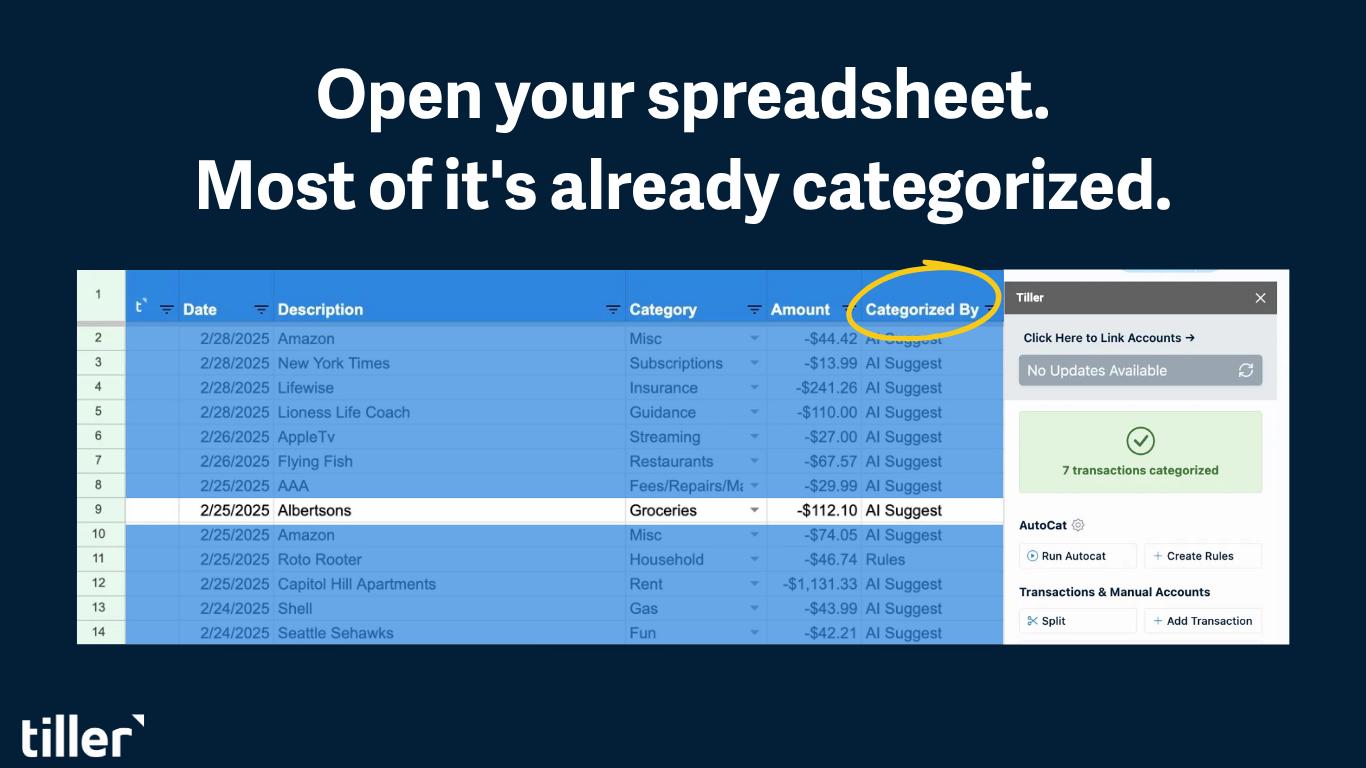
My bank and credit card transactions automatically appear in my Google Sheet. I don’t log into anything. I don’t copy anything. The data is just there. I have AutoCat set up, so it’s already categorized.
The five minutes I spend now are the five minutes that actually matter — the part where I look at what happened, notice what surprised me, and decide whether anything needs to change. That’s the part of budgeting that has any value. Everything before it is just preparation.
The math: 52 hours back per year. I have done a lot of things with those 52 hours. None of them has been building my cats a jungle gym, but the option is technically on the table.
When manual still makes sense
I’m not going to pretend automation is always the answer. Some people genuinely benefit from manual tracking — usually because typing each transaction forces them to confront it. The friction is the feature.
If that’s you, keep doing it. Don’t let me talk you out of a system that works.
But if you’re someone who quit manual tracking — or who’s tried it three times and given up — the friction isn’t building discipline. It’s just preventing you from doing the part of budgeting that actually helps.
That’s the difference between a system that fits your life and a system that’s slowly making you stop.
How Tiller handles the boring part
A quick version, because I work here and you have a right to know:
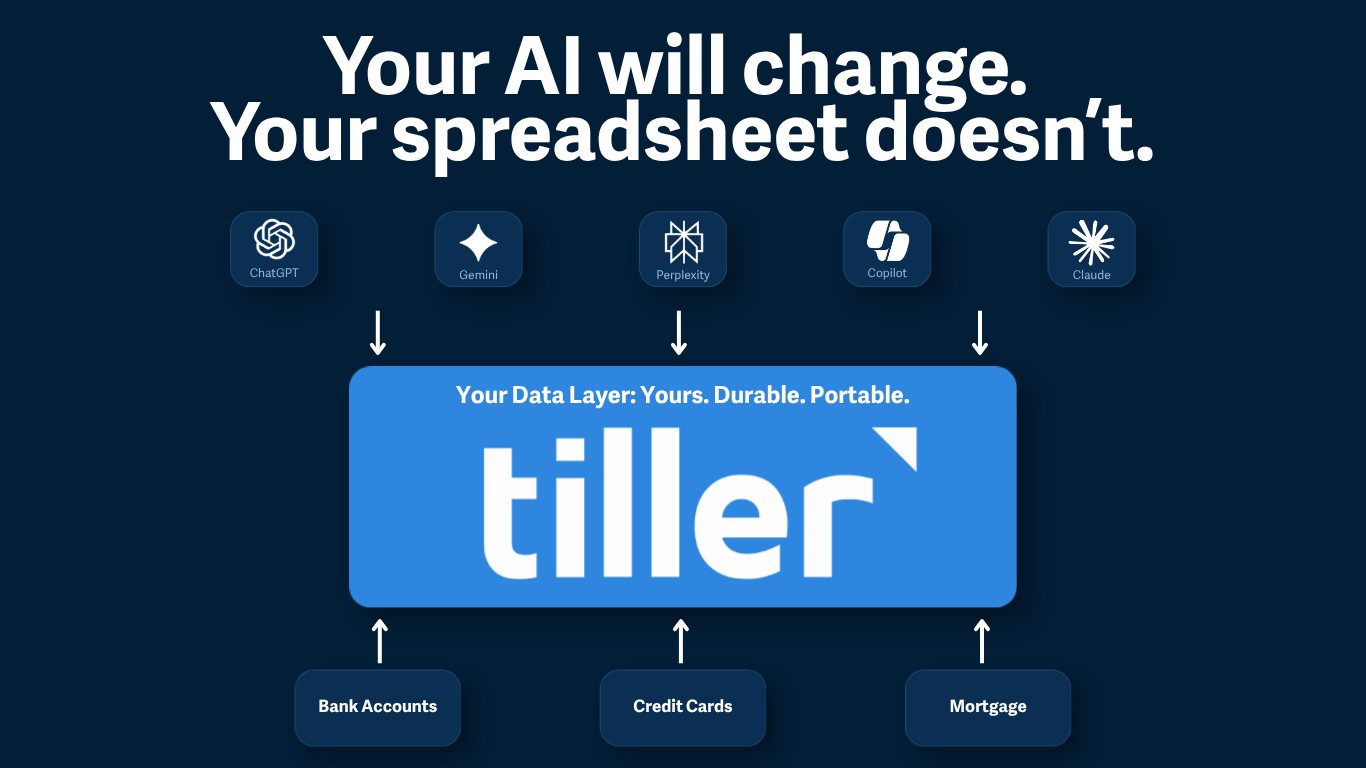
Tiller connects to your bank and credit card accounts and automatically imports your transactions into a Google Sheet or Excel workbook every day. You can use Tiller’s templates — a budget, a debt tracker, a net worth dashboard — or build your own. You can categorize transactions manually or set up rules that do it automatically.
Tiller doesn’t sell your data. Doesn’t show ads. Doesn’t push notifications to you about your coffee. It just gets the boring part done so you can do the part that matters.
If you want to try it, you can do that for free for 30 days. After that, it’s $99/year, which is about $8.25 a month — roughly twelve minutes of the time you’d save in the first week.
The hour was the whole problem
If you’ve ever quit a budget, I’d put money on the cause being the hour, not the discipline. Almost everyone has the discipline. Almost no one has the hour.
The thing I wish someone had told me before budget number 47 is that the hour wasn’t a sign I needed to try harder. It was a sign I needed a different system.
You can have the hour back. Use it however you want.