

Tiller Resource Center > Spreadsheet Templates
Net Worth & Financial Tracking Templates
Spreadsheet templates for tracking your complete financial picture—net worth, retirement planning, cash flow, and long-term progress—in Google Sheets or Excel.
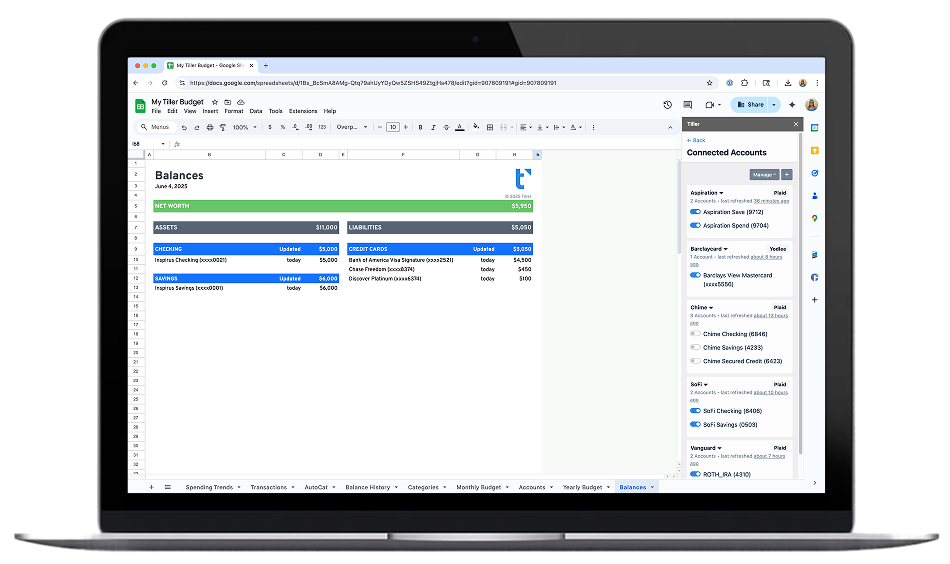
Budgeting shows you where your money goes each month. Net worth tracking shows you whether that spending is actually building toward anything.
A net worth spreadsheet captures everything you own — bank accounts, investment accounts, retirement funds, real estate equity — and everything you owe — credit cards, loans, mortgage — in one place. The difference is your net worth. Track it monthly and you have something more valuable than any single budget report: a picture of your financial trajectory over time.
The templates in this hub go beyond monthly budgets to give you the bigger picture. Net worth trackers show whether your financial position is improving month over month. Retirement planning spreadsheets model whether you’re on track for the future you’re planning. Cash flow templates show the timing of money in and out — not just how much, but when. Investment trackers keep your portfolio visible alongside your everyday finances.
Used together, these templates turn a collection of separate financial accounts into a coherent financial picture. Used with Tiller’s automated bank and investment account feeds, that picture stays current without manual updates every time you want to check where you stand.
Browse the templates:

7 Best Free Retirement Planning Spreadsheets (Updated 2026)
A curated roundup of the best free retirement planning spreadsheets — covering projection calculators, savings rate modelers, and withdrawal scenario planners. Includes both standalone free downloads and Tiller-connected options for tracking retirement account balances automatically.
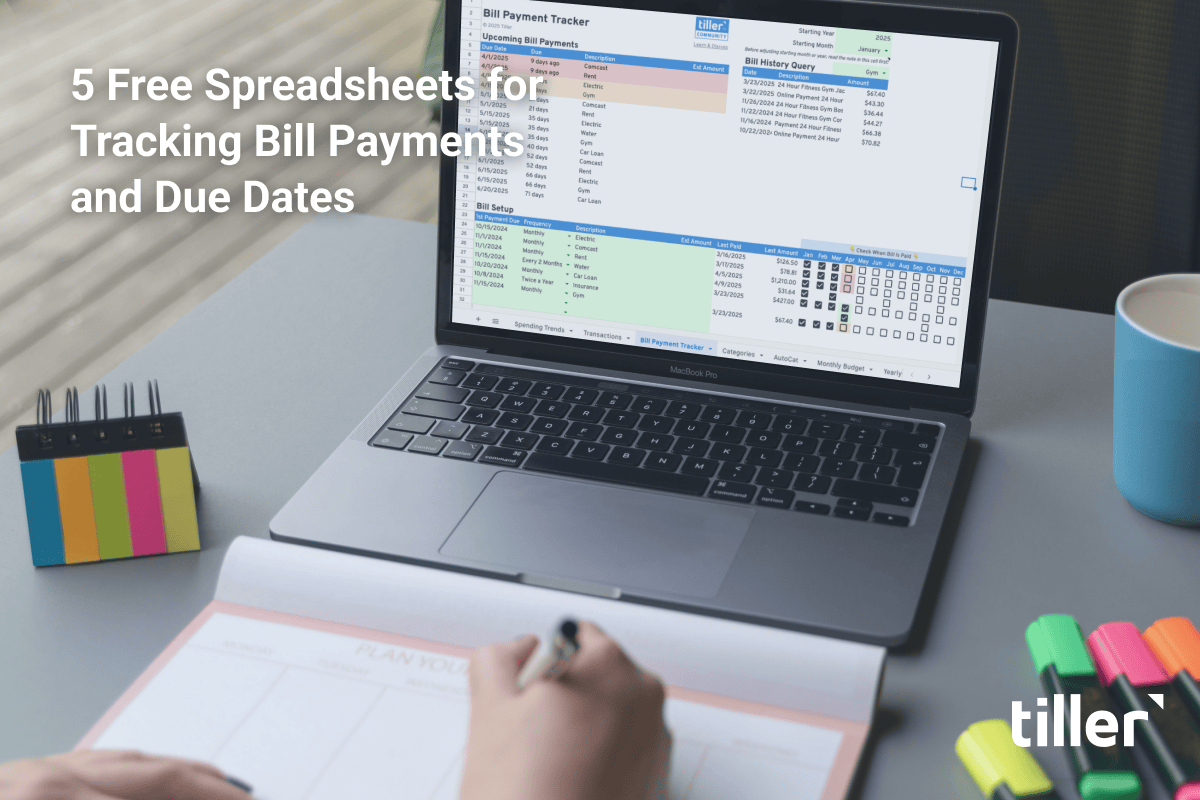
5 Free Spreadsheets for Bills to Track Payments and Due Dates (Updated 2026)
Five free spreadsheet templates for tracking monthly bills, due dates, payments, and outstanding balances — for Google Sheets and Excel. Covers manual tracking approaches and tips for using bill trackers to improve cash flow management and avoid missed payments.
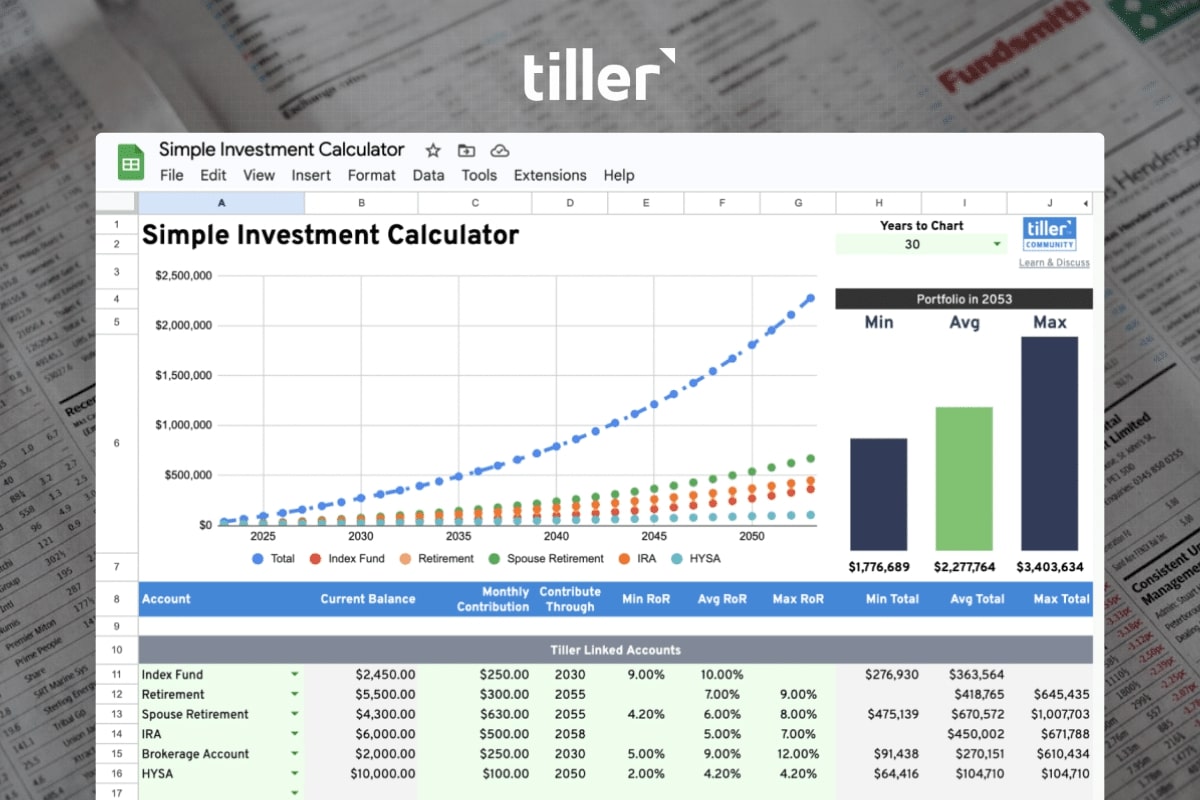
6 Flexible, Free Investment Spreadsheets With Real-Time Trends (Updated 2026)
A curated collection of free investment tracker spreadsheets for Google Sheets and Excel — covering portfolio performance, asset allocation, dividend tracking, and daily price updates. Includes options using Google Sheets’ GOOGLEFINANCE function for real-time pricing.
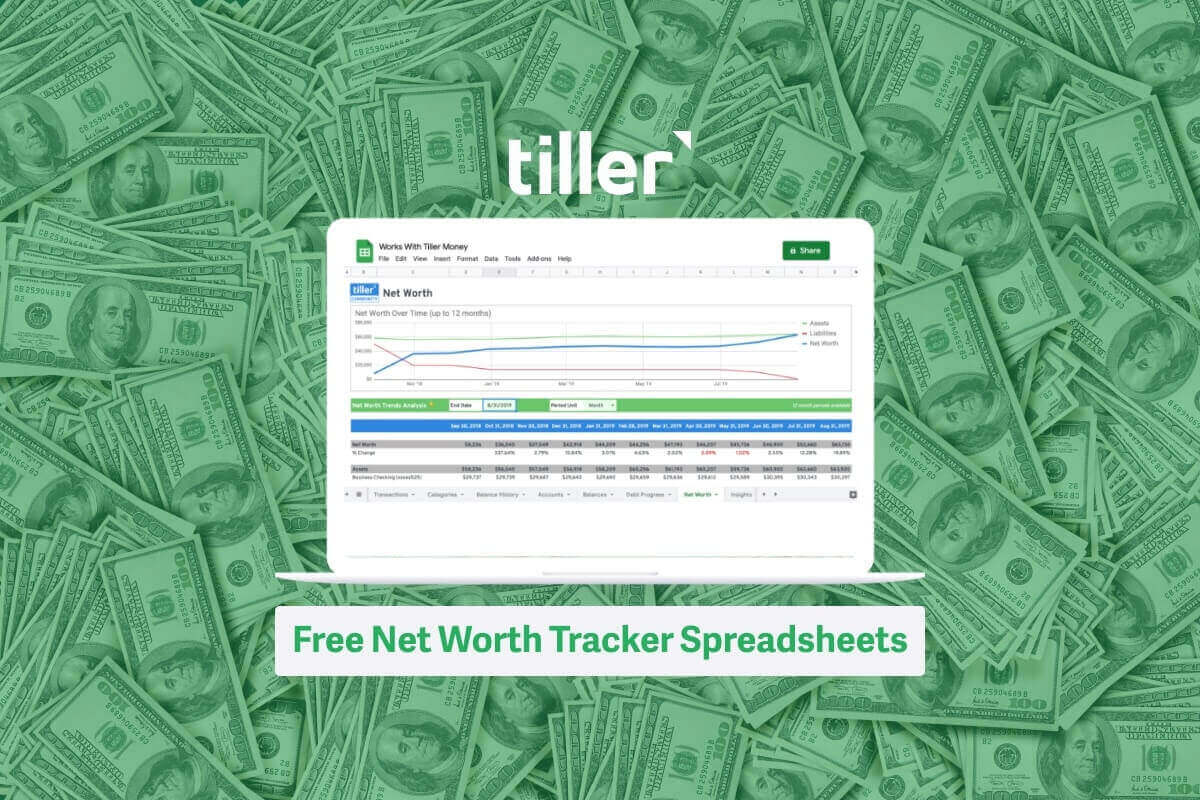
9 Best Free Net Worth Spreadsheets (Updated for 2026)
A roundup of nine free net worth spreadsheet templates for tracking total assets and liabilities. Covers what to look for in a net worth tracker, how each template is structured, and which options work best for different financial situations.

Cash Flow Spreadsheet Templates for Google Sheets and Excel
Templates for tracking and projecting cash flow — money in vs. money out — by week, month, or quarter. Includes both static planning templates and automated options connected to live transaction data.

Personal Finance Tracking Spreadsheet Pack
A collection of tracking templates for monitoring your complete financial life—net worth, account balances, income tracking, and spending summaries—in a coordinated set of sheets.
Why These Templates Work Best with Live Data
A net worth template that you update manually once a month gives you a useful snapshot. A net worth tracker connected to your actual accounts—updating daily as balances change—gives you something closer to a real-time financial dashboard.
The difference matters most when you’re trying to build habits around financial awareness. A spreadsheet that’s always current is one you actually open and check. One that requires 30 minutes of manual updates to reflect reality tends to get opened less and less.
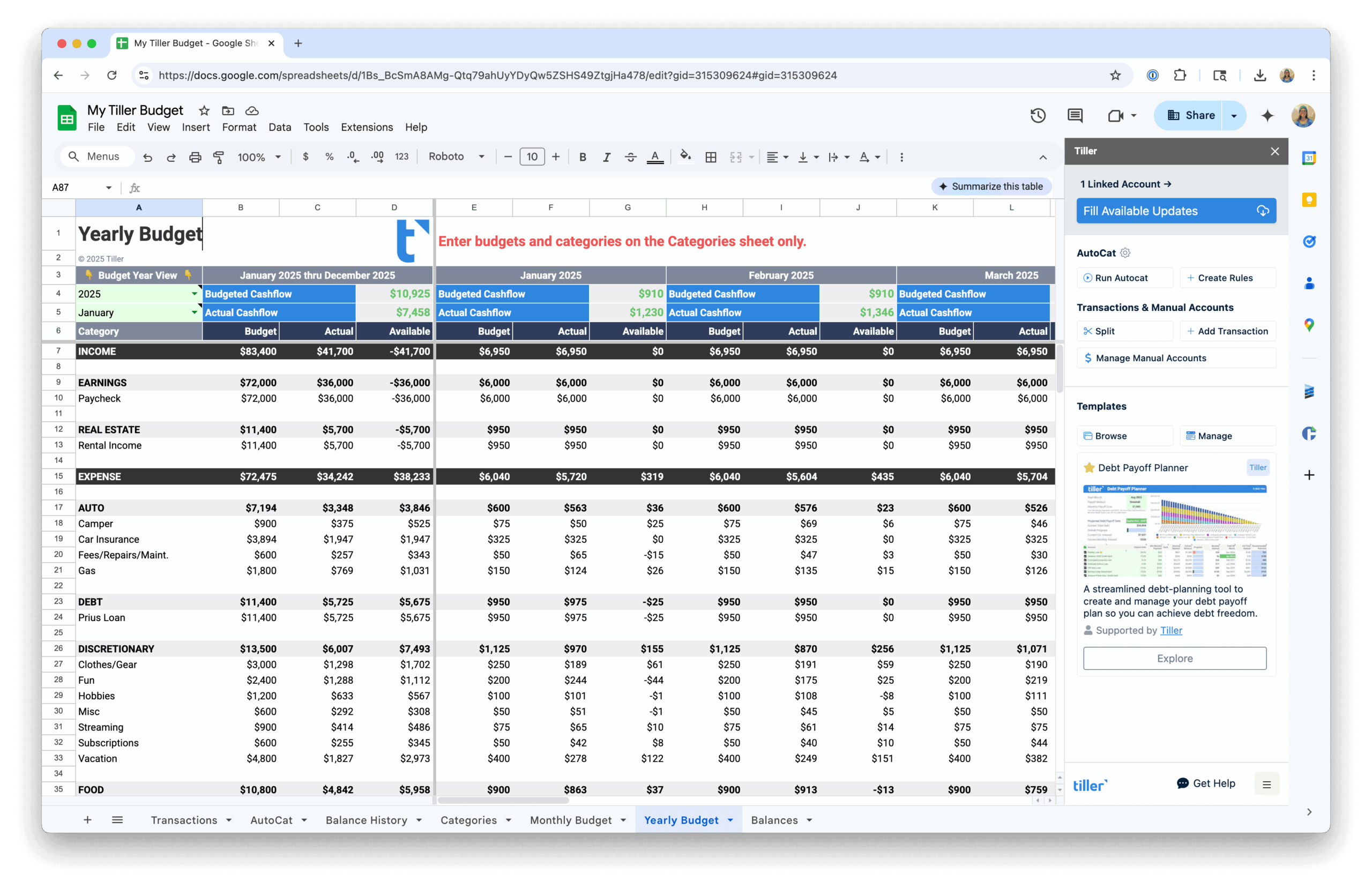
Tiller’s Foundation Template includes a built-in net worth tracker as part of a complete automated financial system. It connects to your bank accounts, investment accounts, and loans—so your asset and liability balances update automatically every morning. You can use the templates in this hub as standalone tools, or connect them to Tiller for ongoing live data.
Other Template Collections
For templates focused on other areas of personal finance:
- Budget Spreadsheet Templates — Monthly budget templates, annual trackers, and templates for specific budgeting methods.
- Debt Payoff Spreadsheet Templates — Templates for tracking debt, planning payoff strategies, and managing multiple loans.
- Template Collections & Toolkits — Multi-purpose template packs covering budgeting, tracking, and planning together.
